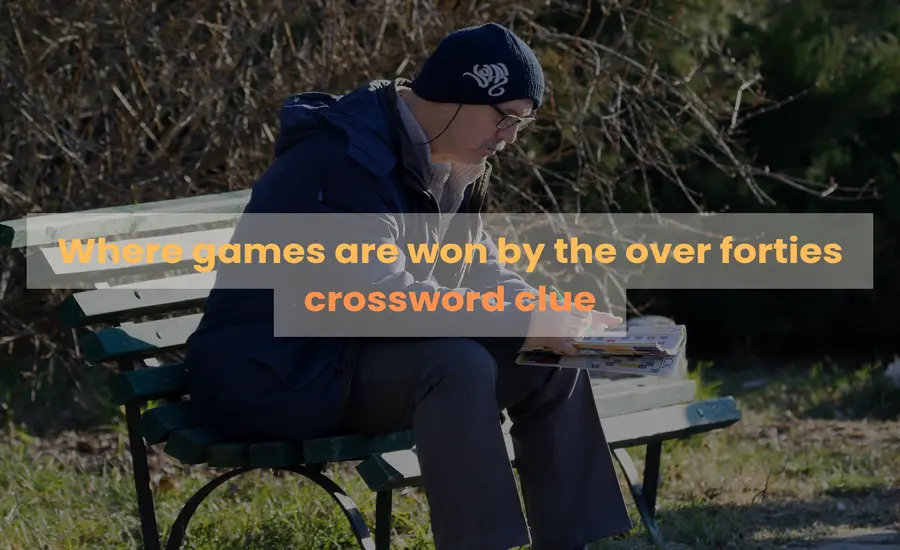
The Art and Science of Crossword Puzzles: Where Games Are Won by the Over-Forties
In the vast landscape of recreational activities that challenge the mind, crossword puzzles stand as monuments to linguistic agility and intellectual prowess. Many enthusiasts have noticed a peculiar demographic trend: these games are often dominated by those in their fifth decade and beyond. The phrase “where the over forties win games” isn’t just a crossword clue, it’s a reflection of a cultural phenomenon that merits deeper exploration. This verbose intersection of wordplay, general knowledge, and mental acuity has captivated generations, with seasoned solvers typically demonstrating remarkable skill compared to their younger counterparts.
What is it about the passage of time that seemingly enhances one’s ability to decipher these intricate linguistic mazes? This comprehensive examination delves into the multifaceted world of crosswords, investigating the various factors that contribute to older solvers’ success, the cognitive benefits they derive, and the enduring appeal of this quintessential word game across age groups.
The Historical Evolution of Crossword Puzzles
The crossword puzzle, now a ubiquitous feature in newspapers and magazines worldwide, has a storied history dating back to the late 19th century. However, it wasn’t until December 21, 1913, that the first modern crossword puzzle appeared in the New York World newspaper, created by journalist Arthur Wynne. This inaugural puzzle was diamond-shaped rather than the now-familiar square grid, but it established the fundamental structure that would captivate millions in the decades to follow. The puzzles gained tremendous popularity during the 1920s, leading to what was then called “crossword fever,” with dedicated books, specialized dictionaries, and even songs written about the craze.
Throughout the 20th century, crosswords evolved in complexity and style. The New York Times, which began publishing crosswords in 1942, set what many consider the gold standard for American puzzles. Under the editorial guidance of figures like Margaret Farrar, Will Weng, Eugene T. Maleska, and Will Shortz, the Times crossword developed distinctive conventions and escalating difficulty throughout the week, Monday puzzles being the most straightforward and Saturday puzzles presenting the greatest challenge. Sunday puzzles, while more extensive, typically offer difficulty comparable to Thursday puzzles.
British and American crosswords diverged significantly in style during this evolution. American puzzles typically feature more intersecting words with fewer black squares, while British cryptic crosswords emphasize deceptive wordplay and indirect clues. This distinction created two different solving cultures, each with itsown techniques and traditions. Australian and Canadian puzzles often blend elements from both styles, creating regional variations that reflect linguistic and cultural differences.
The digital revolution transformed crosswords yet again, bringing them from print to screens and introducing interactive features impossible in the paper medium. Online solving, competitive tournaments, and crossword applications have expanded accessibility while introducing new generations to the puzzle form. Despite these technological advances, the cognitive skills required to excel at crosswords remain largely unchanged, a factor that may help explain why more mature solvers continue to dominate the field.
The Cognitive Science Behind Crossword Success
The notable proficiency of older adults in crossword solving has attracted attention from cognitive scientists seeking to understand the relationship between aging and specific intellectual abilities. Research suggests several key factors that may contribute to this phenomenon:
Crystallized intelligence, the accumulated knowledge and vocabulary acquired throughout life tends to increase with age, unlike fluid intelligence, which involves on-the-spot reasoning and peaks in early adulthood. Crosswords heavily favor crystallized intelligence, drawing on extensive stores of words, facts, and cultural references that accumulate over decades of lived experience. A 70-year-old solver has simply encountered more words, read more books, and absorbed more trivia than a 25-year-old counterpart, providing a substantial advantage in puzzle solving.
Pattern recognition abilities develop with repeated exposure to crossword conventions. Regular solvers become adept at recognizing common crosswordese, those words appearing frequently in puzzles but rarely in everyday conversation (like “etui,” “adit,” or “oleo”). This specialized vocabulary compounds over years of solving, giving long-term enthusiasts an edge that newer participants lack. Additionally, the ability to identify recurring clue patterns allows experienced solvers to decode ambiguous clues more readily.
Neuroplasticity research indicates that regular cognitive challenges like crossword puzzles may help maintain neural pathways and potentially slow age-related cognitive decline. Multiple studies have examined the relationship between word puzzle engagement and cognitive function in older adults, with several suggesting that consistent crossword solving correlates with better performance on certain cognitive tasks, particularly those involving verbal fluency and memory. While causation remains difficult to establish conclusively (perhaps those with stronger cognitive abilities are simply more drawn to puzzles), the relationship between regular solving and cognitive health appears robust.
The temporal commitment required for crossword mastery naturally favors those who have devoted years to the practice. Much like chess or musical instruments, crossword solving develops over thousands of hours of engagement, with expert performance typically emerging after extended practice. Those in their forties and beyond have simply had more time to develop the specialized knowledge and strategies required for efficient solving.
“Part of the tide of lawlessness” crossword clue: The Cultural Impact of Crosswords
When examining cryptic crossword clues like “Part of the tide of lawlessness,” one encounters the distinctive cultural footprint that crosswords have impressed upon society. This particular clue might yield the answer “IDLE” (hidden within “tIDE of Lawlessness”), demonstrating the clever wordcraft that characterizes these puzzles. Such linguistic gymnastics have established crosswords as more than mere games; they represent an intellectual tradition that bridges generations and fosters communities of dedicated enthusiasts.
Crossword puzzles have transcended their role as solitary diversions to become cultural institutions that reflect and preserve linguistic heritage. They serve as repositories for obscure knowledge, archaic terms, and cultural references that might otherwise fade from collective memory. For many older solvers, crosswords provide a comforting continuity in an ever-changing world, maintaining connections to vocabulary and concepts from earlier eras. This custodial function helps explain why those with longer life experience often excel; they possess direct familiarity with references that younger solvers might need to research.
The social dimension of crossword solving has evolved considerably in recent decades. What was once predominantly a solitary activity now supports vibrant communities, both online and in-person. Crossword tournaments draw hundreds of competitors across age brackets, while online forums allow solvers to discuss particularly challenging clues and celebrate particularly elegant constructions. The American Crossword Puzzle Tournament, founded by Will Shortz in 1978, has grown into a major annual event that both celebrates top solvers and welcomes newcomers to the competitive solving community.
Crosswords have permeated popular culture, appearing in countless films and television programs as signifiers of intellectualism or as plot devices. The documentary “Wordplay” (2006) brought widespread attention to the competitive solving community, while films like “The Imitation Game” highlighted the historical connection between crossword expertise and codebreaking. This cultural prominence reinforces the special status accorded to skilled solvers, particularly those with decades of experience navigating these linguistic labyrinths.
The pedagogical value of crosswords extends beyond entertainment, with educators increasingly recognizing their utility in vocabulary development, spelling reinforcement, and general knowledge acquisition. Many schools incorporate age-appropriate puzzles into language arts curricula, while ESL programs utilize crosswords to support vocabulary retention. This educational application helps cultivate the next generation of solvers while promoting the cognitive skills that undergird puzzle success.
They have been worn by men in retirement: The Demographics of Crossword Enthusiasts
The clue “They have been worn by men in retirement” (answer: SLIPPERS) cleverly plays on the double meaning of “retirement,” exemplifying the wordplay that makes crosswords intellectually stimulating. This linguistic dexterity particularly appeals to demographic groups with strong language skills and broad general knowledge characteristics that often correlate with age and education level.
The demographic profile of the typical crossword enthusiast reveals significant patterns that help explain the advantage enjoyed by mature solvers. Survey data consistently show that crossword enthusiasts tend to be more educated than the general population, with disproportionate representation among professionals in fields requiring strong verbal abilities, such as education, journalism, law, and medicine. This educational skew reflects the puzzles’ demands for vocabulary depth and general knowledge breadth, attributes developed through formal education and ongoing intellectual engagement.
Age distribution among regular solvers skews noticeably older, with the highest participation rates typically found among those aged 45-70. This concentration aligns with the observation that “games are won by the over forties,” though excellent solvers exist across all age groups. Interestingly, while many begin solving in their youth, peak performance often emerges in middle age when accumulated knowledge combines with still-sharp cognitive processing. The generational difference appears less pronounced among cryptic crossword enthusiasts, where the specialized skills required create a more selective solver population across age ranges.
Gender differences in solving style and participation have been observed in several studies, though the overall gender balance among enthusiasts appears relatively even. Some research suggests women may employ more systematic solving approaches, while men might rely more on intuitive leaps, though individual variation far exceeds gender-based tendencies. The crossword community has worked in recent decades to address historical gender imbalances in puzzle construction, with increasing numbers of female constructors creating puzzles for major publications.
Geographic variations in crossword culture reveal distinctive regional preferences and styles. The British cryptic tradition differs substantially from American-style puzzles, while Australian and Canadian crosswords often incorporate elements from both approaches. These regional differences reflect broader cultural distinctions in humor, wordplay appreciation, and communication style. Digital distribution has somewhat blurred these geographic boundaries, allowing solvers to experience diverse puzzle styles regardless of location.
Socioeconomic factors influence crossword participation, with higher rates among middle and upper-middle-class individuals. This correlation likely stems from multiple factors: greater leisure time, higher education levels, and cultural traditions that value wordplay and intellectual recreation. The accessibility of crosswords through newspapers, magazines, and now digital platforms makes them more democratically available than many other recreational pursuits, though the specific vocabulary and cultural knowledge required can present barriers to novice solvers from different cultural backgrounds.
His work is above most people’s crossword clue: The Psychology of Cryptic Crosswords
The cryptic clue “His work is above most people” (yielding ROOFER) demonstrates the clever misdirection that characterizes advanced crosswords. This psychological element, the puzzle constructor’s deliberate attempt to mislead while playing fair, creates the distinctive cognitive challenge that attracts dedicated solvers. Understanding the psychology behind these puzzles illuminates why they particularly appeal to mature intellects with well-developed problem-solving strategies.
Solving advanced crosswords requires a specialized form of cognitive flexibility known as “lateral thinking,” the ability to approach problems from unconventional angles. This capacity to shift perspective, recognizing multiple interpretations of phrases and identifying hidden wordplay, tends to strengthen with experience. Older solvers often demonstrate superior ability to navigate between literal and figurative interpretations, recognizing when a clue operates on multiple semantic levels simultaneously. This sophisticated linguistic processing distinguishes expert solvers from novices who may fixate on a single interpretation.
Ambiguity tolerance comfort with uncertainty during the solving process emerges as another crucial psychological attribute of successful crossword enthusiasts. Research suggests this cognitive trait often increases with age as individuals accumulate experience navigating complex situations without immediate resolution. The patience to hold multiple potential interpretations in mind while gathering additional information through intersecting words exemplifies this tolerance. Younger solvers sometimes struggle with this aspect, preferring puzzles that yield more immediate feedback and resolution.
Motivation patterns among dedicated solvers reveal interesting psychological dynamics. While the immediate satisfaction of completing puzzles provides reinforcement, many long-term enthusiasts report deeper motivations: maintaining cognitive sharpness, connecting with cultural knowledge, and experiencing the peculiar aesthetic pleasure of elegant wordplay. These intrinsic motivations sustain engagement over decades, contributing to the expertise development that advantages older solvers. The self-reinforcing cycle of improvement, where success increases enjoyment, which promotes further engagement, helps explain the remarkable persistence many demonstrate in their crossword habit.
Psychological flow states, characterized by deep absorption and intrinsic reward, commonly occur during crossword solving. Research by Mihaly Csikszentmihalyi and colleagues suggests that activities balancing challenge with skill level produce optimal psychological experiences. The graduated difficulty of newspaper crosswords throughout the week creates a natural progression that facilitates these flow experiences. Veteran solvers report experiencing this immersive state more consistently than beginners, suggesting that the psychological rewards increase with expertise.
The satisfaction derived from solving particularly challenging puzzles appears linked to the brain’s reward systems. Neuroscientific research indicates that cracking difficult cryptic clues activates dopaminergic pathways similar to those involved in other forms of problem-solving. This biological reinforcement mechanism helps explain the persistent appeal of crosswords across decades of an enthusiast’s life, creating the conditions for the accumulated expertise that advantages mature solvers.
The top salesman in print crossword: The Competitive Dimension
The clue “The top salesman in print crossword” (potentially yielding ADMAN) highlights the commercial aspects of puzzling while nodding to the competitive element that energizes many enthusiasts. This competitive dimension has evolved from informal speed-solving among friends to organized tournaments that crown national and international champions competitions where experienced solvers typically dominate.
Competitive crossword solving has developed into a structured activity with established tournaments drawing participants from diverse backgrounds. The American Crossword Puzzle Tournament, founded by Will Shortz in 1978, represents the pinnacle of American competitive solving, while the Times National Crossword Championship holds a similar status in the United Kingdom. These events feature timed solving of progressively difficult puzzles, with finals often conducted on oversized grids before audiences. The tournament format rewards both accuracy and speed, creating intense pressure that favors experienced solvers with automated parsing skills and extensive knowledge bases.
The competitive hierarchy reveals interesting patterns regarding age and performance. While top competitors span a wide age range, the highest echelons have historically been dominated by solvers in their forties through sixties. Dan Feyer, who won the ACPT championship seven consecutive times (2010-2016), began his dominant run in his late thirties. Tyler Hinman, who won five consecutive championships beginning at age 20, represents a notable exception that proves particularly instructive, his unprecedented young success followed intensive deliberate practice and immersion in crossword culture. These exceptional young competitors demonstrate that while age correlates with solving prowess, dedicated practice and specialized knowledge acquisition can accelerate expertise development.
Championship-level solving depends on sophisticated strategies that develop through extensive experience. Elite solvers report processing clues through multiple simultaneous interpretations, rapidly filtering possibilities against intersecting constraints. This parallel processing capability typically develops after thousands of puzzles, giving older enthusiasts an inherent advantage. Additionally, championship solvers develop specialized techniques for managing uncertainty, such as provisional fill and strategic guessing when confronted with unfamiliar terms, approaches refined through repeated tournament participation.
The psychological pressure of competitive solving reveals individual differences in performance under stress. Tournament veterans develop coping mechanisms for maintaining focus despite time constraints and surrounding competitors. This psychological resilience often correlates with age and experience, as mature competitors draw on broader life experiences to maintain composure during high-stakes solving. First-time tournament participants frequently report performance decrements due to anxiety, while veterans have typically developed routines and mental approaches that mitigate these effects.
Digital competition has expanded competitive opportunities beyond in-person tournaments. Online solving platforms like Crossword Race, the New York Times’ daily leaderboards, and specialized speed-solving applications create global competitive ecosystems where solvers compare completion times. These digital venues have somewhat democratized competition while providing valuable feedback that accelerates skill development. The accessibility of these platforms has attracted younger solvers to competitive solving, gradually reshaping demographic patterns within the community.
Train that is brought to absolute rest crossword: The Technical Elements of Crossword Construction
The clue “Train that is brought to absolute rest crossword” (potentially yielding EDUCATE + IS + 0 = EDUCATES) exemplifies the technical intricacy of well-crafted puzzles. Understanding the construction principles behind crosswords reveals why they pose distinctive challenges that reward the accumulated knowledge and refined parsing abilities typical of mature solvers.
Crossword construction follows exacting technical standards that have evolved over decades of tradition. Modern American puzzles typically feature rotational symmetry, with black square patterns creating identical shapes when rotated 180 degrees. This aesthetic constraint significantly complicates grid construction, as does the convention that all words must contain at least three letters, with black squares generally not exceeding one-sixth of the total grid. These technical parameters create cascading constraints that puzzle constructors must navigate while maintaining interesting vocabulary and thematic integrity.
The vocabulary selection process illustrates why experienced solvers gain advantages over time. Constructors balance several competing considerations: linguistic freshness, cultural relevance, solving difficulty, and technical constraints from intersecting words. The resulting lexicon includes both common terms and specialized vocabulary rarely encountered outside puzzles the infamous “crosswordese” that regular solvers gradually memorize. Terms like ETUI (needle case), ESNE (Anglo-Saxon slave), and ADIT (mine entrance) appear frequently in puzzles while remaining obscure in general usage, creating a knowledge barrier that experienced solvers have already surmounted.
Cluing techniques have evolved substantially, reflecting changing linguistic sensibilities and construction philosophies. Early puzzles relied heavily on straightforward definitions, while modern crosswords employ diverse cluing approaches: wordplay, misdirection, cultural references, and punning constructions. This evolution creates generational differences in solving approaches, as older enthusiasts may have adapted through decades of changing conventions. Adeptness at decoding contemporary cluing styles requires ongoing engagement with current puzzles, potentially disadvantaging solvers who learned on earlier conventions without updating their approach.
Thematic elements add another technical dimension to modern crosswords. Many puzzles incorporate unifying concepts that link multiple long entries through wordplay, subjects, or structural patterns. Recognizing these thematic connections often provides crucial solving leverage, as theme entries typically occupy prominent positions within the grid. Experienced solvers develop pattern recognition for common thematic approaches, allowing them to identify unifying concepts more rapidly than novices. This pattern recognition represents another accumulated advantage that develops through extensive solving experience.
The technical balance between fairness and challenge represents perhaps the most delicate aspect of construction. Crossword ethics dictate that puzzles, however difficult, must be ultimately solvable through logical deduction and reasonable knowledge without requiring mind-reading or extreme obscurity. This principle manifests in crossing patterns, constructors carefully manage intersections to avoid “Naticks” (crossings of two obscure terms) that would render sections unsolvable. Understanding these construction ethics helps experienced solvers trust that solutions exist even for seemingly impenetrable clues, encouraging the persistence necessary for completing challenging puzzles.
Be up in a local tax and get a discount crossword: The Linguistics of Crosswords
The cryptic clue “Be up in a local tax and get a discount” (potentially yielding REBATE BE reversed in RATE) exemplifies the sophisticated linguistic mechanisms operating within advanced crosswords. This linguistic complexity helps explain why those with extensive language exposure and developed verbal reasoning characteristics that accumulate over decades frequently excel at these puzzles.
Linguistic ambiguity functions as the fundamental mechanism driving crossword difficulty. Constructors deliberately exploit homonyms, polysemy, and syntactic ambiguity to create the misdirection that makes puzzles challenging. The phrase “flower basket” might refer to a container for blooms or something that floats on water (flower), while “invalid item” could indicate something incorrect or an object belonging to a disabled person. Recognizing and navigating these ambiguities requires sophisticated linguistic processing developed through extensive exposure to language in diverse contexts a characteristic advantage of older solvers with richer linguistic experiences.
Etymological knowledge provides substantial advantages for crossword solving, particularly for clues referencing word origins or historical meanings. Many cryptic crosswords employ archaic definitions or reference etymological roots unfamiliar to casual language users. For example, understanding that “quick” originally meant “alive” helps decode phrases like “the quick and the dead.” This specialized knowledge typically accumulates through years of reading and language study, creating another dimension where life experience translates to solving problems.
Dialect variations and regional vocabulary appear frequently in crosswords, reflecting the diverse linguistic traditions within English-speaking communities. British puzzles might reference terms unfamiliar to American solvers (like “lorry” for truck), while American constructions might include regionalisms unfamiliar to international audiences. Older solvers typically possess broader exposure to these variations through travel, reading, and media consumption across decades, allowing them to navigate linguistic diversity more effectively than their younger counterparts with more limited exposure.
Neologisms and contemporary slang present interesting challenges that can occasionally advantage younger solvers. Modern puzzles increasingly incorporate current terminology, internet language, and popular culture references that might be more familiar to younger generations. This evolution creates interesting cross-generational dynamics, with different age groups possessing complementary knowledge bases. Collaborative solving between generations often proves particularly effective, combining the extensive traditional knowledge of older solvers with younger participants’ familiarity with emerging terminology.
The metalinguistic awareness required for advanced problem-solving, the ability to think about language as an object of analysis develops through accumulated experience with language in diverse contexts. This capacity to simultaneously consider multiple interpretations of phrases, recognize subtle wordplay, and maintain awareness of linguistic conventions typically strengthens throughout adulthood. Mature solvers often demonstrate superior ability to shift between semantic frames, identifying when constructors have employed puns, anagrams, homophones, or other linguistic devices that operate below the surface level of clues.
I’m quiet, but he probably won’t be crossword clue: The Social Dimension of Crossword Culture
The clue “I’m quiet, but he probably won’t be” (yielding IM + P = IMP, suggesting a mischievous child who won’t remain quiet) illustrates the playful intelligence that characterizes crossword culture. This social dimension of the communities, traditions, and shared experiences surrounding crosswords plays a crucial role in the development of solving expertise, creating environments where knowledge is transmitted across generations.
Crossword communities have evolved from informal newspaper readership to organized clubs, online forums, and social media groups dedicated to specific publications or solving styles. These communities serve crucial functions: providing assistance, celebrating particularly elegant clues, and transmitting specialized knowledge about constructor tendencies and common crosswordese. Participation in these communities accelerates expertise development through exposure to diverse problem-solving approaches and specialized vocabulary. Older solvers often occupy respected positions within these communities, serving as repositories of institutional knowledge and historical perspective on the evolution of puzzle conventions.
Mentorship relationships frequently develop between experienced enthusiasts and newer solvers, creating pathways for transmitting accumulated wisdom. These relationships may form through family connections, with crossword habits passing through generations, or through organized solving groups where veterans provide guidance to beginners. This knowledge transfer helps explain how solving techniques and specialized vocabulary are perpetuated across decades, maintaining continuity while accommodating evolving conventions. The most successful younger solvers typically report significant mentorship from established enthusiasts who accelerated their development through directed guidance.
Crossword tournaments and events create spaces for community formation and cultural transmission. Beyond their competitive function, these gatherings serve as conventions where enthusiasts share solving strategies, discuss construction techniques, and celebrate their shared passion. The social bonds formed at these events sustain engagement with puzzling, creating support networks that encourage ongoing participation. Regular attendance at such events correlates strongly with solving improvement, as participants absorb knowledge through both formal presentations and informal interactions with accomplished solvers.
Online communities have transformed crossword culture, creating unprecedented opportunities for solver interaction and knowledge sharing. Websites like Rex Parker’s blog, Diary of a Crossword Fiend, and specialized forums provide platforms where solvers discuss daily puzzles, analyze cluing techniques, and debate construction merits. These digital communities democratize access to expert analysis while preserving the accumulated wisdom of experienced solvers. The archival nature of these platforms creates valuable resources for newer enthusiasts, allowing them to access years of commentary and analysis that accelerate their development.
The pedagogical dimension of crossword culture reveals important mechanisms for expertise transmission. Many experienced solvers actively participate in teaching activities, writing columns explaining solving techniques, creating tutorials for beginners, or developing graduated puzzle series that build skills systematically. These educational efforts help integrate newcomers into the community while preserving traditions and standards developed over decades of puzzle evolution. The most effective pedagogical approaches acknowledge the substantial knowledge gap between novices and experts, providing scaffolded experiences that gradually introduce specialized vocabulary and solving techniques.
It makes one admission after another: The Future of Crosswords in a Digital Age
The clue “It makes one admission after another” (yielding TURNSTILE) cleverly captures the sequential nature of both physical admission gates and the cognitive process of solving crosswords. This sequential progression mirrors the evolution of crossword puzzles themselves as they transition from print to digital formats, creating new possibilities and challenges for solvers across generations.
Digital transformation has fundamentally altered the crossword landscape, introducing features impossible in print: immediate feedback, solving statistics, collaborative options, and multimedia elements. Online solving platforms offer graduated hint systems that support learning while maintaining challenge, potentially accelerating expertise development compared to traditional solving. Mobile applications make puzzles accessible throughout the day, allowing brief solving sessions that accumulate practice hours more efficiently than dedicated newspaper time. These technological advances have attracted younger solvers to the tradition while providing new tools for veterans to maintain their skills.
Algorithmic construction tools have revolutionized puzzle creation, allowing constructors to generate and test grid configurations with unprecedented efficiency. These computational approaches complement rather than replace human creativity, handling technical constraints while leaving thematic development and clever cluing to human ingenuity. The resulting hybrid approach has increased puzzle production while maintaining quality standards. Solver communities have generally embraced these innovations, recognizing that well-implemented technology enhances rather than diminishes the solving experience.
The demographic shifts facilitated by digital adoption show interesting patterns. While print puzzles maintain a predominantly older audience, digital platforms have attracted substantial participation from younger solvers. This generational bridge creates valuable knowledge transfer opportunities, with veterans sharing accumulated wisdom while younger participants contribute familiarity with contemporary culture. The resulting cross-generational communities strengthen the tradition’s continuity while allowing natural evolution of conventions and references.
Accessibility improvements represent one of digitization’s most significant benefits. Adjustable fonts, customizable contrast, and screen reader compatibility make puzzles more accessible to solvers with visual impairments or other disabilities. Additionally, digital platforms facilitate translation and localization, allowing puzzle traditions to cross linguistic boundaries more readily than print publications. These accessibility enhancements expand the solver community while preserving the cognitive benefits puzzles provide across diverse populations.
Pedagogical applications of digital crosswords have expanded significantly in educational contexts. Interactive puzzles with scaffolded assistance serve as vocabulary-building tools in language instruction, while specialized constructions support learning in fields from medicine to history. These educational applications introduce younger generations to crossword conventions within subject-specific contexts, potentially cultivating future enthusiasts while delivering immediate educational benefits. The data collection capabilities of digital platforms enable researchers to better understand skill development patterns, potentially informing more effective teaching methodologies.
The future research agenda regarding crosswords spans multiple disciplines. Cognitive scientists continue exploring the potential neuroprotective effects of regular solving, with longitudinal studies tracking relationships between puzzle engagement and cognitive maintenance during aging. Computational linguists leverage crosswords to develop more sophisticated natural language processing models, recognizing that the ambiguity navigation required for advanced clues represents a frontier challenge for artificial intelligence. Educational researchers investigate optimal integration of puzzles into curriculum design, examining knowledge retention and engagement effects across diverse student populations. These research directions promise a deeper understanding of crosswords’ cognitive and cultural significance while potentially identifying mechanisms to accelerate expertise development for enthusiasts of all ages.
Conclusion:
The exploration of crossword puzzles through historical, cognitive, linguistic, and social lenses reveals the multifaceted reasons behind the observation that “games are won by the over forties.” This advantage emerges not from any single factor but from the convergence of accumulated knowledge, refined cognitive processing, specialized vocabulary acquisition, and extensive pattern recognition developed through years of engagement. The mature solver’s edge manifests most dramatically in tournaments and difficult cryptic puzzles, where rapid integration of diverse knowledge domains provides decisive advantages.
The crystallized intelligence that accumulates throughout life the vast lexicon, cultural references, historical knowledge, and trivia that fill mental storehouses provides the foundational advantage for older solvers. This knowledge base expands continuously throughout adulthood, creating ever-richer resources for decoding obscure references and specialized terminology. While younger solvers may possess superior processing speed, the sheer volume of accumulated information typically compensates for any age-related cognitive slowing, particularly for puzzles emphasizing breadth of knowledge over rapid computation.
The specialized linguistic processing that develops through extensive solving experience, what experts call “cryptic literacy,” represents perhaps the most significant advantage for veteran enthusiasts. This specialized skill set includes rapid recognition of common cluing patterns, efficient filtering of potential interpretations, and sophisticated navigation of intentional misdirection. These capabilities typically develop through thousands of solving hours, providing substantial advantages that mere general intelligence cannot readily overcome without comparable experience.
The social transmission of solving techniques through communities, mentorship, and published guides accelerates expertise development while preserving traditions across generations. These knowledge networks primarily benefit those with long-term engagement in solving communities, creating accumulated advantages that compound over decades. The most successful younger solvers typically report significant community integration that accelerated their development through access to accumulated wisdom from veterans.
The debate regarding whether crossword expertise primarily reflects intelligence or experience finds resolution in recognizing their complementary roles. While baseline verbal intelligence creates necessary foundations, research consistently indicates that deliberate practice and accumulated knowledge represent the primary determinants of solving proficiency. This finding aligns with expertise research across domains, where dedicated practice with appropriate feedback consistently predicts performance more accurately than innate ability measures. This practice-centered perspective explains why solving skills typically peak in middle age or beyond, when accumulated experience combines with still-robust cognitive processing.
The cognitive benefits associated with regular crossword solving may contribute to maintaining the advantages of mature enthusiasts. Research suggests consistent engagement with demanding cognitive activities potentially supports neural maintenance during aging, helping preserve verbal abilities particularly relevant to crossword success. While causality remains difficult to establish conclusively, the correlation between regular solving and maintained cognitive function appears robust across multiple studies, suggesting reciprocal benefits between aging expertise and cognitive health.
The future of crosswords appears vibrant despite societal changes and technological evolution. Digital platforms have attracted younger participants while providing new tools for veterans, creating diverse communities that span generations. The fundamental cognitive challenges that make crosswords engaging linguistic ambiguity navigation, knowledge integration, and pattern recognition, remain compelling regardless of delivery medium. This enduring appeal ensures that while “games are won by the over forties” today, the tradition will continue evolving through the engagement of enthusiasts across the age spectrum, maintaining cultural continuity while embracing natural evolution.
For the dedicated solver, crosswords offer more than mere entertainment; they provide cognitive challenge, cultural connection, and the distinctive satisfaction of bringing order to linguistic chaos. The accumulated wisdom of decades spent navigating these verbal labyrinths creates the expertise observed among mature enthusiasts, demonstrating that in this particular arena, life experience translates directly to performance excellence. The crossword puzzle stands as that rare intellectual pursuit where the passage of time brings not decline but enhancement, where games truly are won by the over forties.